How to Choose a Recording Studio Without Wasting Your Money
How to Choose a Recording Studio Without Wasting Your Money
There are more recording studios available now than at any point in history. That’s great for pricing, but it also means you can easily book the wrong room, burn through your budget, and walk out with tracks that don’t sound the way you imagined.
Choosing a recording studio is a lot like choosing a barber. Credentials matter, but so does the feel of the place, the way the person listens to what you want, and whether you walk out looking (or sounding) like yourself. Here’s what actually matters when you’re making the call.
Start With the Engineer, Not the Gear
The most common mistake people make when choosing a recording studio is picking based on equipment lists. A room full of vintage Neve preamps and Neumann mics means nothing if the person behind the console doesn’t know how to use them well.
A great engineer in a modest room will outperform a mediocre engineer in a world-class facility every single time. Look at who’s going to be working your session. Listen to records they’ve mixed or tracked. Pay attention to whether their past work sounds polished and professional across different styles. If a studio has a main engineer, then you can listen to things that have been recorded at the studio instead, since the engineer was most likely on that session.
If the studio website doesn’t show you examples of things done at the studio, it is worth asking.
Room Acoustics Matter More Than You’d Expect
You can upgrade a microphone. You can swap out preamps. You cannot fix a room that sounds bad.
The acoustic treatment in a tracking room shapes everything about your recording. A well-treated live room gives you clean, controlled takes that translate well in the mix. A poorly treated room adds reflections, muddiness, and frequency buildup that no plugin can fully undo.
When you visit a studio (and you should visit before booking), pay attention to the space. Does the room feel controlled, or echoey and ringy? You don’t need to be an acoustics expert. Your ears will tell you plenty. Even just talking inside a room is helpful to get a feel for how it sounds.
Gear Is a Factor, Not the Factor
Good equipment does matter. You want a studio running a professional DAW with quality microphones, preamps, and monitoring. But the difference between a $3,000 mic and a $500 mic is a lot smaller than the difference between an experienced engineer and a beginner.
What you should actually care about: Does the studio have the right tools for your project? If you’re tracking a full band, do they have enough inputs and isolation? If you’re recording vocals, do they have a treated booth and a selection of mics to find one that fits your voice?
Gear lists are nice. Relevant gear for your specific project is better.
Questions to Ask Before You Book
Don’t be shy about asking questions. Any studio worth your money will welcome them.
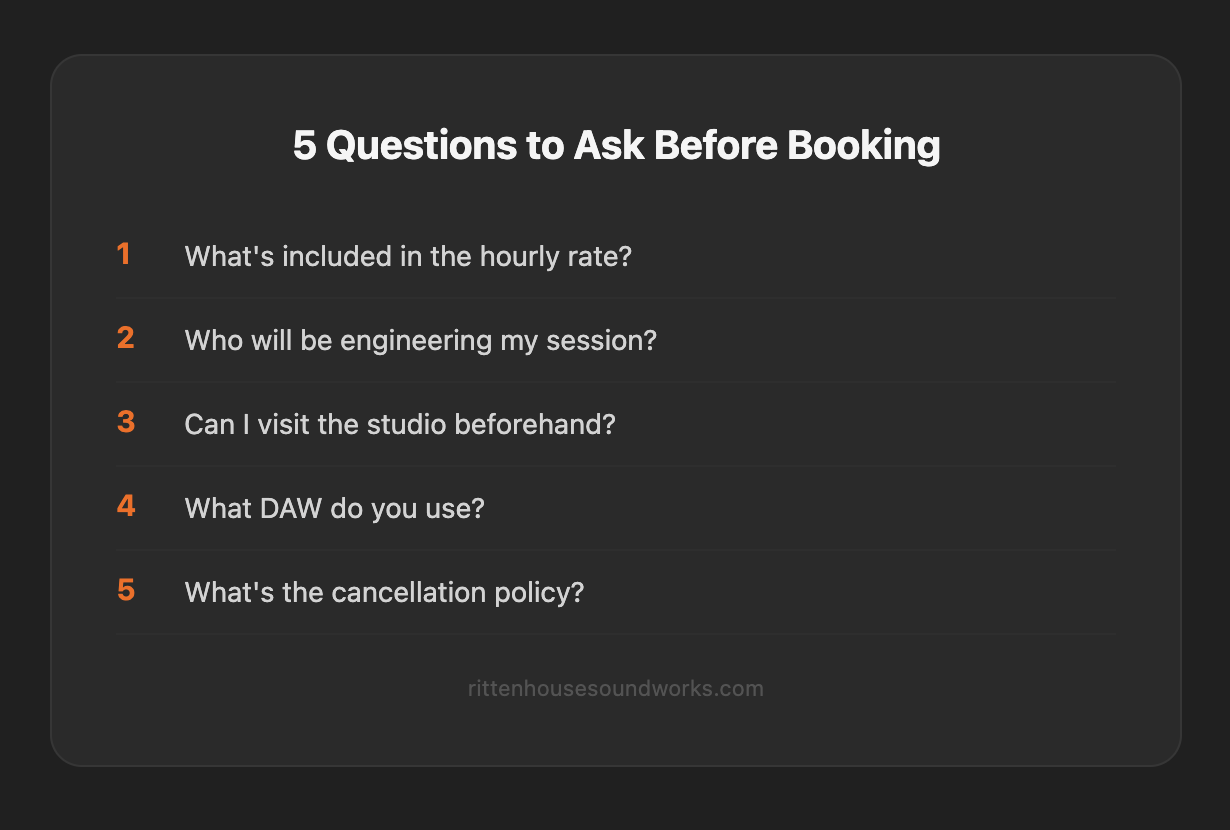
What’s included in the rate? Some studios include an engineer in their hourly rate. Others charge separately for the room and the engineer. Some include mixing, others don’t. Know exactly what you’re paying for before the meter starts running.
Who will be engineering my session? At larger studios, you might book with one person and end up with someone else at the board. Make sure you know who’s actually going to be in the room with you. Ideally you can talk with your engineer before the session too.
Can I visit the studio first? A yes here is a good sign. A studio that’s confident in their space will happily let you see it. If they dodge this question, wonder why.
What DAW do you use? This matters if you’ve already started a project at home and need to bring in session files. Transferring between DAWs is possible but adds time and potential headaches. Pro Tools is the industry standard for recording studios. If you are recording in Logic or something else, talk this over with your engineer. They may have a certain way they want files exported from your DAW.
What’s your cancellation policy? Studios are businesses. They block time for you and turn away other clients. Know the terms so nobody gets surprised.
Red Flags to Watch For
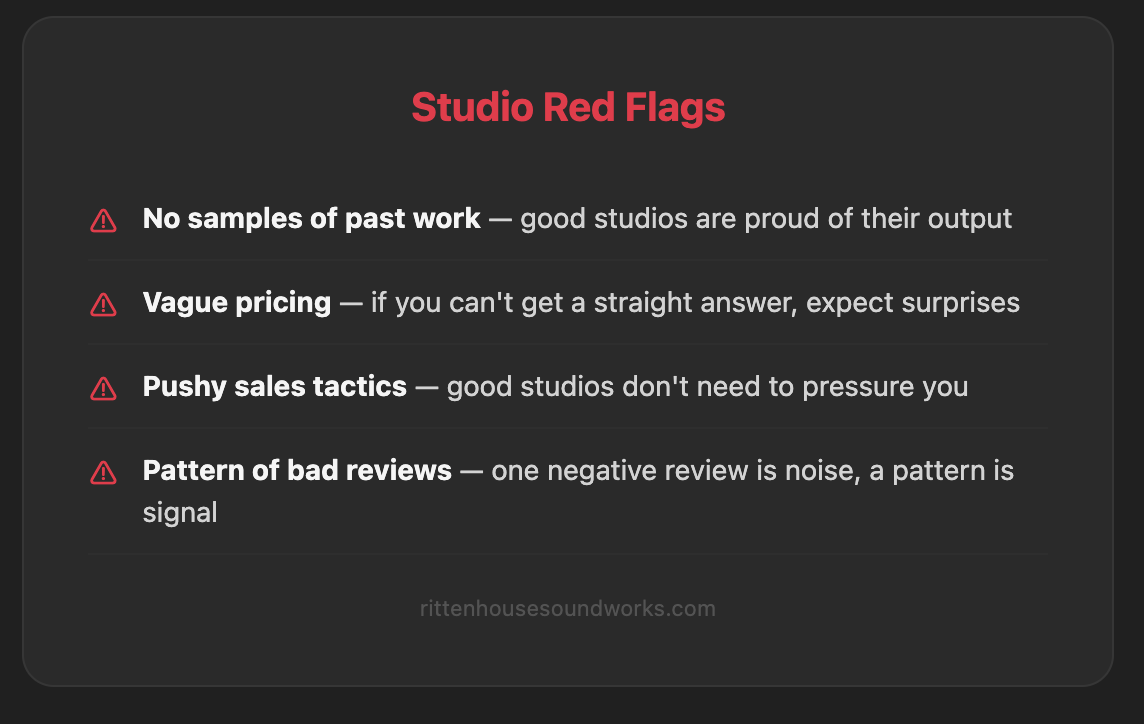
Not every studio is worth your money. Some warning signs:
No samples of past work. If a studio can’t show you anything they’ve produced, recorded, or mixed, you’re taking a gamble. Good studios are proud of their output and happy to share it. Even just client lists are a good starting point.
Vague or unclear pricing. If you can’t get a straight answer on what things cost, expect surprises on the invoice. Studios with transparent pricing respect your budget.
Pushy sales tactics. A good studio doesn’t need to pressure you. If someone’s giving you the hard sell or making you feel like you have to decide right now, walk away. Studios that are booked up because they’re good don’t need to chase you.
Consistently bad reviews. One negative review could be a difficult client. A pattern of complaints about the same issues tells you something real. Check to see if you know anyone else who has recorded at a given studio.
The Vibe Check
This one’s harder to quantify, but it might be the most important factor on this list.
Recording is a vulnerable thing. You’re performing, creating, making mistakes, trying again. The environment you do that in affects the results. An uncomfortable, sterile, or tense room produces tense performances. A space where you feel relaxed and welcome lets you actually do your best work. It is very common for studios to feel like dungeons or unnatural. This is why visiting the studio is so important. Envision you working in the room, does it feel comfortable?
When you visit a studio or talk to the engineer, notice how you feel. Are they listening to what you want? Do they seem interested in your project? Do you feel like a valued client or just another booking on the calendar?
Your comfort level directly affects your performance. We’ve seen artists who sounded completely different between a room where they were at ease and one where they weren’t. Our piece on preparing for your first session gets into the performance side of things.
Home Recording Is a Valid Option Too
Choosing a studio doesn’t always mean choosing a commercial space. For some projects, recording at home and then hiring a professional for mixing and mastering is the smarter move. It depends on your budget, your skills, and what the project actually requires.
The goal isn’t to spend the most money. It’s to get the best result for the money you have.
Making Your Decision
Compare two or three studios. Listen to their work. Visit if you can. Ask the questions above and pay attention to how they answer, not just what they say.
And remember: the fanciest studio in the world won’t save a song that isn’t ready. Come in prepared, know your studio etiquette, and put your energy into the performance. That’s where great records actually come from.
We keep our booking process simple on purpose. Pick a date, tell us about your project, and we can find a time to show you the space and help you make the decision that is right for your project.