How to Prepare for Your First Recording Session
How to Prepare for Your First Recording Session
You’ve been writing, rehearsing, and saving up. The session is booked. Now there’s a countdown running in the back of your mind and a growing list of questions you’re not sure who to ask.
That nervous energy is normal — and honestly, it’s a good sign. It means you care about the outcome. The trick is turning that energy into preparation so you walk in feeling ready instead of overwhelmed.
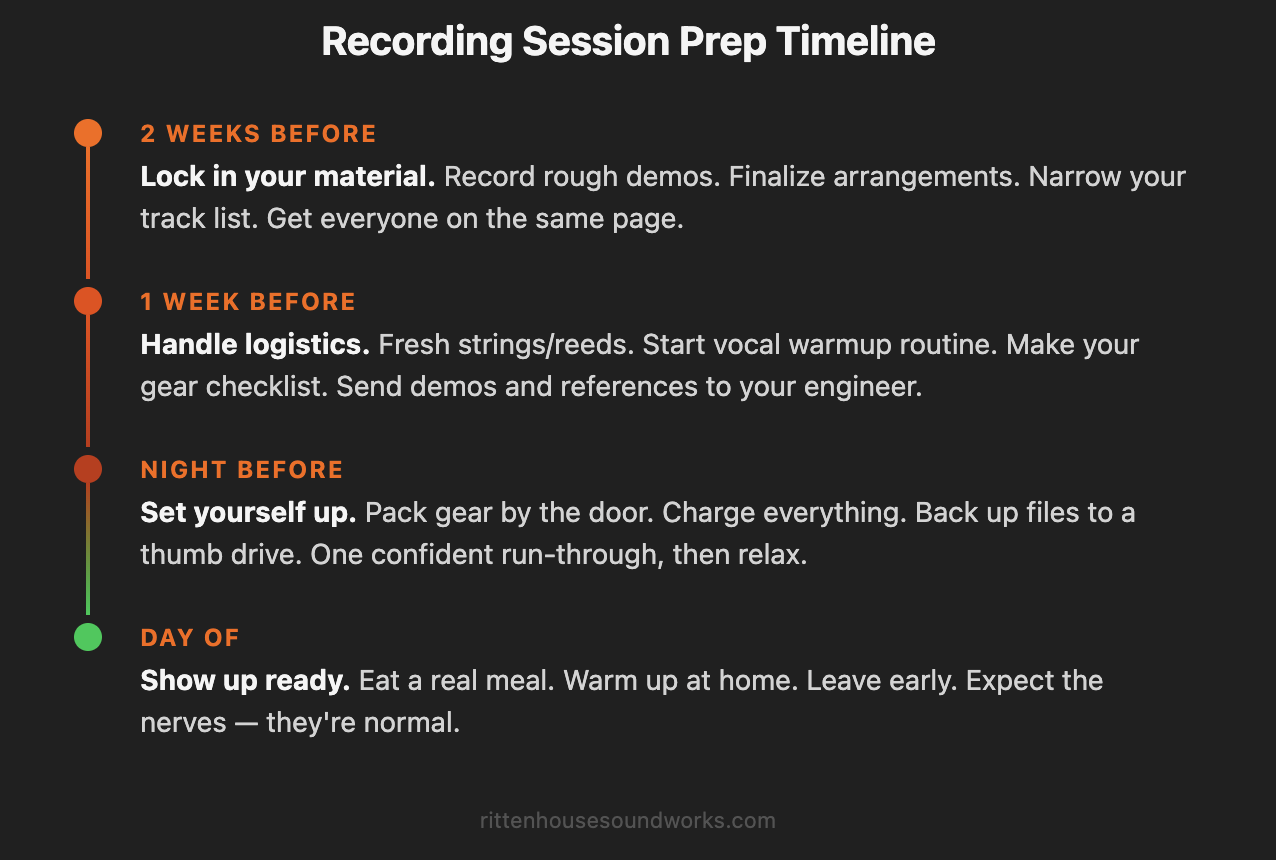
We broke this into a simple timeline so you know what to do and when.
Two Weeks Before: Lock In Your Material (assuming you booked more than 2 weeks out)
This is where the real work happens. Two weeks out, your songs should be finished — not “almost finished,” not “I’ll figure out the bridge in the studio.” Done.
Record rough demos on your phone or laptop. They don’t need to sound good. They need to exist so you can listen back with fresh ears and catch the parts that aren’t working. That second verse you’ve been glossing over in rehearsal? You’ll hear it in the demo.
If you’re working with other musicians, make sure everyone has the same version of every song. Send the demos around. Agree on the arrangements now, not in a room that’s costing you by the hour. If you haven’t already figured out budgeting for your recording, this is also a good time to nail that down. Things always devaite a little bit during recording but the big decisions should probably be made beforehand.
Two weeks out is also when you should be narrowing your track list. It’s tempting to book a session and try to record everything you’ve ever written. Be realistic about how many songs you can actually do well in the time you’ve booked. Three great tracks beats six rushed ones every time.
One Week Before: Handle the Logistics
Fresh strings on your guitar. New drumheads if yours are dead. Reeds, valve oil, cables. Whatever your instrument needs, handle it now. Not the day of. New strings need a day or two to stretch and hold tuning.
Vocalists, this is the week to take care of your voice. Stay hydrated, get sleep, and ease off any habits that dry you out. If you have a vocal warmup routine, do it daily. If you don’t have one, find one and start now — a week of consistent warmups makes a noticeable difference in your range and stamina.
Make a checklist of everything you need to bring: instruments, cables, pedals, lyric sheets, a laptop with your backing tracks or demos, headphones if you prefer your own. Think through the session start to finish and write down anything you’d be stuck without.
This is also the week to send your engineer any pre-production material. Demos, reference tracks, notes on the sound you’re going for. The more context they have before you walk in, the less setup time you’ll burn on day one. Ideally you talk with your engineer before you come in so you both are on the same page about everything.
The Night Before: Set Yourself Up
Get your gear together and by the door. Charge everything. Load your backing tracks onto a thumb drive as a backup in case your laptop decides to update itself at the worst possible moment. (It will try…)
Lay out what you need so the morning isn’t a scramble. If you’re driving, know where you’re going and where you’re parking. Small logistics stuff, but eliminating those tiny stressors frees up mental space for the work that actually matters.
Run through your songs one last time. Not a marathon rehearsal, just a confident pass-through. You’re not trying to improve anything tonight. You’re reminding your hands and your voice what they already know.
Then stop. Go do something you enjoy. Watch a movie, cook dinner, hang with friends. The worst thing you can do the night before a session is obsess over it until 2am. Going into the studio is fun, remember that.
Day Of: Get Out of Your Own Head
Eat a real meal before your session. Not a great time to experiment with intermittent fasting. Your brain and your body need fuel, and low blood sugar makes everything harder — pitch, timing, decision-making.
If you’re a vocalist, warm up at home. Start gentle, work your way up. By the time you get to the studio, your voice should be loose and ready. You can absolutely do some test takes or warm up takes before some real ones.
Leave early enough that you’re not rushing. Arriving stressed and out of breath sets a tone for the whole session that’s hard to shake.
Red Light Fever Is Real
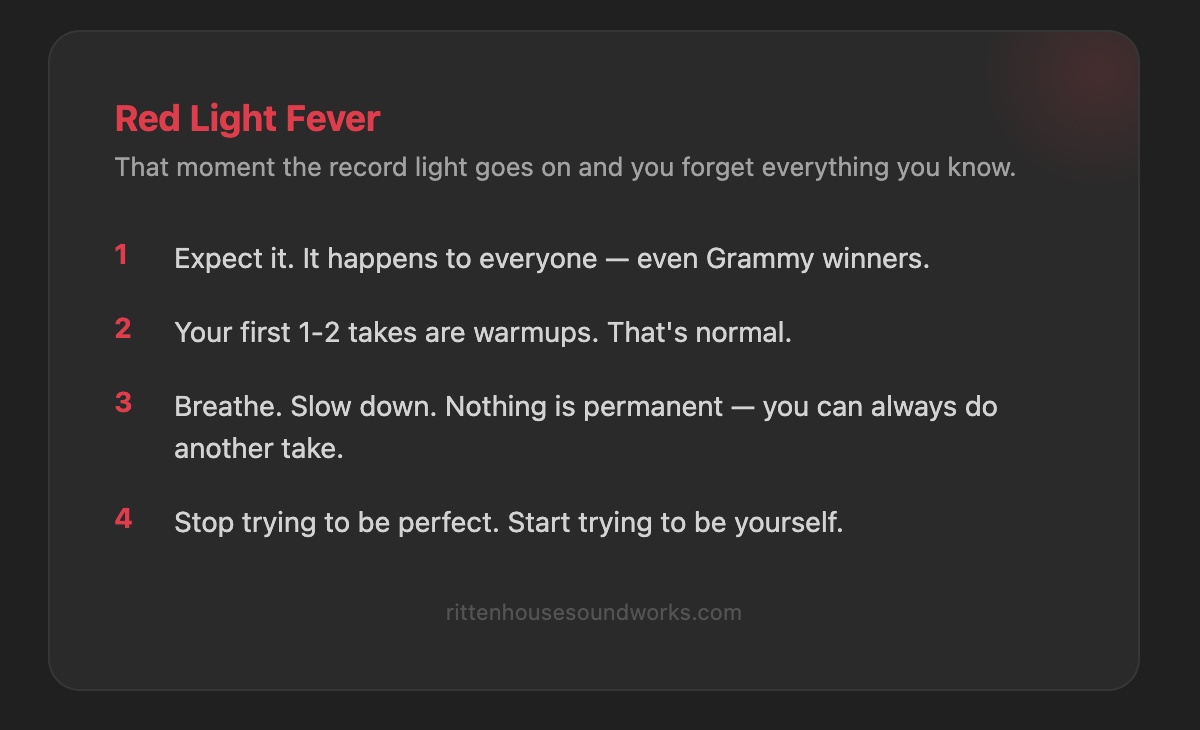
Nobody warns you about this part. The moment that record light goes on, something changes in your brain. The part you’ve played flawlessly a thousand times in your bedroom suddenly feels impossible. Your hands tighten up. Your timing drifts. Your voice gets thin.
That’s red light fever, and it happens to everyone. Seasoned session musicians deal with it. Grammy winners deal with it. It’s not a sign that you’re not ready. It’s a normal response to the pressure of permanence.
The fix isn’t to fight it. It’s to expect it. Your first take or two might feel stiff. That’s fine. They’re shaking the nerves loose. Most engineers know this and will run a few passes before anyone starts keeping takes seriously.
Breathe. Slow down. Remember that nothing is permanent in a recording session — you can always do another take. This isn’t a live performance with a million people watching. The moment you stop treating each take like it has to be perfect, you’ll start performing like yourself again.
What Not to Worry About
You don’t need to understand the gear. You don’t need to know what a compressor does or why there are six microphones on the drums. That’s your engineer’s job. (If you’re curious about what happens after tracking, here’s a breakdown of what mastering is and whether you need it.)
You don’t need to get everything in one take. Some of the best recordings in history were assembled from multiple takes. That’s not cheating. That’s how records are made.
And you don’t need to act like you’ve done this before. Studios aren’t exclusive clubs. If it’s your first time, say so. Your engineer will walk you through everything and make the whole process feel a lot less mysterious. We’ve got some studio etiquette tips if you want to know what to expect once you’re in the room.
The Short Version
Prepare your music two weeks out. Handle gear and logistics one week out. Set yourself up the night before. Show up fueled, warmed up, and on time the day of. Expect the nerves, breathe through them, and trust the process.
That’s it. The studio is just a room with good microphones/gear and someone who knows how to use it. You bring the music. The preparation is what lets you actually enjoy it.
If you’re getting ready for your first session and want to talk through any of it — song selection, what to expect, how to make the most of your time — we’re always happy to help. That’s what Rittenhouse Soundworks is here for.