How Much Does It Cost to Record a Song? A Realistic Breakdown
How Much Does It Cost to Record a Song? A Realistic Breakdown
Anywhere from $0 to $50,000+. Not a helpful range, right? So let’s get into the real numbers.
What you’ll spend depends on where you record, who’s engineering, how prepared you are, and what “done” means to you. We’ve seen artists make incredible records on tight budgets and watched others burn through five figures with nothing to show for it. The difference usually comes down to preparation, not the budget itself.
Studio Tiers and What They Actually Cost
These are realistic recording studio costs in 2026:
| Studio Type | Hourly Rate | Full Song Estimate | What You Get |
|---|---|---|---|
| Home Studio | $0 (your gear) | $0–$500 | Your room, your timeline, your learning curve |
| Project Studio | $30–$75/hr | $200–$1,500 | Decent acoustics, experienced operator, basic outboard |
| Professional Studio | $75–$350/hr | $1,500–$5,000 | Treated rooms, quality mic collection, seasoned engineer |
| World-Class Studio | $350–$1,500+/hr | $5,000–$50,000+ | Large live rooms, vintage consoles, top-tier everything |
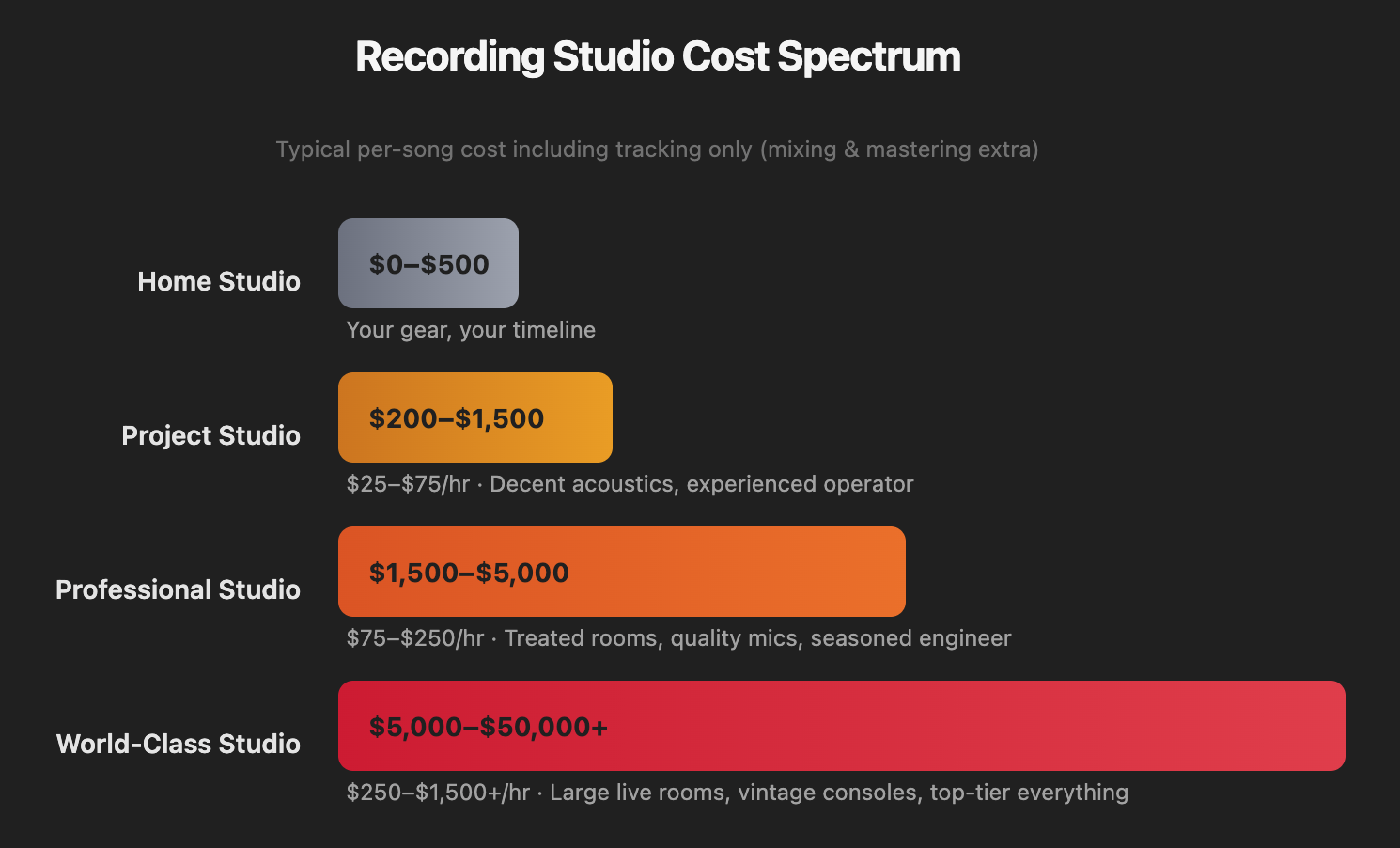
Those “full song” estimates assume a relatively straightforward production — vocals over a beat, or a four-piece band tracking live. Complex arrangements, multiple overdub sessions, or extensive production work push costs higher.
What’s Usually Included (and What Isn’t)
This is where people get surprised. A studio’s hourly rate typically covers the room and a staff engineer. That’s it.
Usually included in the hourly rate:
- Studio space and equipment
- Staff/house engineer
- Basic rough mixes at the end of the session (usually just used for you to have something to listen to after the session)
Usually costs extra:
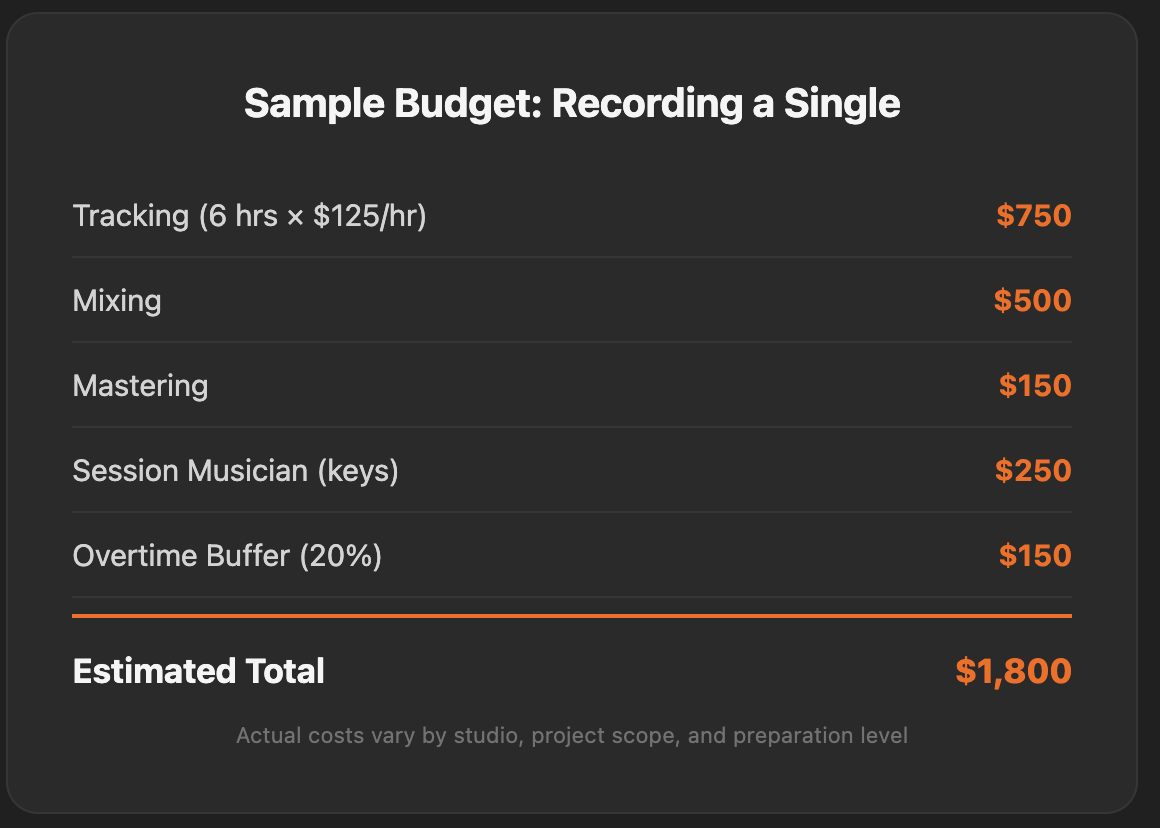
- Mixing (often $150–$1,000+ per song or hourly)
- Mastering ($50–$300+ per song)
- Session musicians
- Producer fees
- Vocal tuning / drum editing / detailed post-production can cost extra
- Additional hard drive or file delivery fees
- Revisions beyond what’s agreed upon
Mixing alone can equal or exceed your tracking costs. If someone quotes you a recording rate, always ask: does that include mixing and mastering, or just tracking?
The Hidden Costs Nobody Talks About
Preparation time. If you’re working out arrangements in the studio, you’re paying rehearsal rates at studio prices. Know your parts before you walk in.
Overtime. Most sessions run longer than planned. Budget an extra 20–30% beyond your initial estimate. You’ll either use it or be pleasantly surprised.
Food and parking. A full day in the studio means meals. If you’re recording in a city like Philadelphia, parking can add up too. Small line items, but they stack. Ask your studio to see if they offer free parking.
Re-dos. If you’re not happy with a performance or a sound, you’re booking another session. This is the most expensive hidden cost, and it’s almost always preventable with better pre-production.
How to Get the Most Out of Your Budget
Do pre-production. Record demos at home, even on your phone. Work out every arrangement decision before the clock starts. This single step saves more money than anything else.
Be realistic about your timeline. A single song with vocals over a produced beat might take 3–4 hours to track. A full band tracking live could take a full day just for basic tracks. Don’t assume you’ll knock it out in two hours.
Combine services. Studios that handle tracking, mixing, and mastering under one roof — like what we do at Rittenhouse Soundworks — sometimes bundle pricing. Fewer handoffs also means less time lost translating your vision between different people.
What Most Artists Actually Spend
For independent artists recording a single song at a professional studio with mixing and mastering, the typical all-in cost lands between $2,000 and $5,000. That gets you quality tracking, a polished mix, and a release-ready master.
You can absolutely do it for less. A solid project studio with an engineer who knows what they’re doing can deliver a great-sounding record for $500–$1,500 all-in. Gear is more accessible than ever, so the gap between project studios and professional studios has gotten a lot smaller. At higher price points, you’re really paying for the experience, acoustics, and not having to think about many of the details.
On the other end, we’ve heard $800 records that outperform $15,000 ones. Spending more doesn’t automatically mean sounding better. How well the artist performs and how prepared they are going in makes a bigger difference than the room rate.
So What Should You Budget?
If you’re recording your first professional single, start with $1,500–$3,000 as a working budget. That gives you enough room to book a decent studio, get it mixed properly, and have it mastered for release.
If that’s out of reach right now, a home recording with professional mixing and mastering ($300–$700) will get you a lot further than most people expect. The tracking environment matters, but a skilled mix engineer can do a lot with a clean vocal recorded in a treated closet. Or the best option might be a mixture of recording some stuff at a studio and doing some in a home environment.
Whatever your budget, put the money toward what actually affects the final sound the most: a good engineer, proper mixing, professional mastering and a good recording environment. The studio’s gear list is way less important than the people using it.
Have a song ready to record? We’d love to hear about your project. Get in touch and we’ll give you a straight quote — no pressure, no upsell.