Recording Studio Etiquette: The Unwritten Rules Every Artist Should Know
Recording Studio Etiquette: The Unwritten Rules Every Artist Should Know
Nobody hands you a rulebook when you walk into a recording studio for the first time. And honestly, most of the “rules” you’ll find online are nonsense — don’t touch anything, don’t breathe too loud, don’t look the engineer in the eye (lol). Come on…
The real recording studio etiquette comes down to one thing: setting yourself up to get the best possible results from your session. Everything here is about helping you walk out with something you’re proud of.
Know Your Material Before You Show Up
This is the single biggest thing that separates a productive session from an expensive one. The studio is for capturing and refining your music, not for writing it from scratch. The days of going into the studio for 6 months straight to write an album are mostly gone.
That doesn’t mean every note needs to be carved in stone. Some of the best moments happen when you try something spontaneous in the room. But there’s a difference between creative experimentation and showing up without a plan.
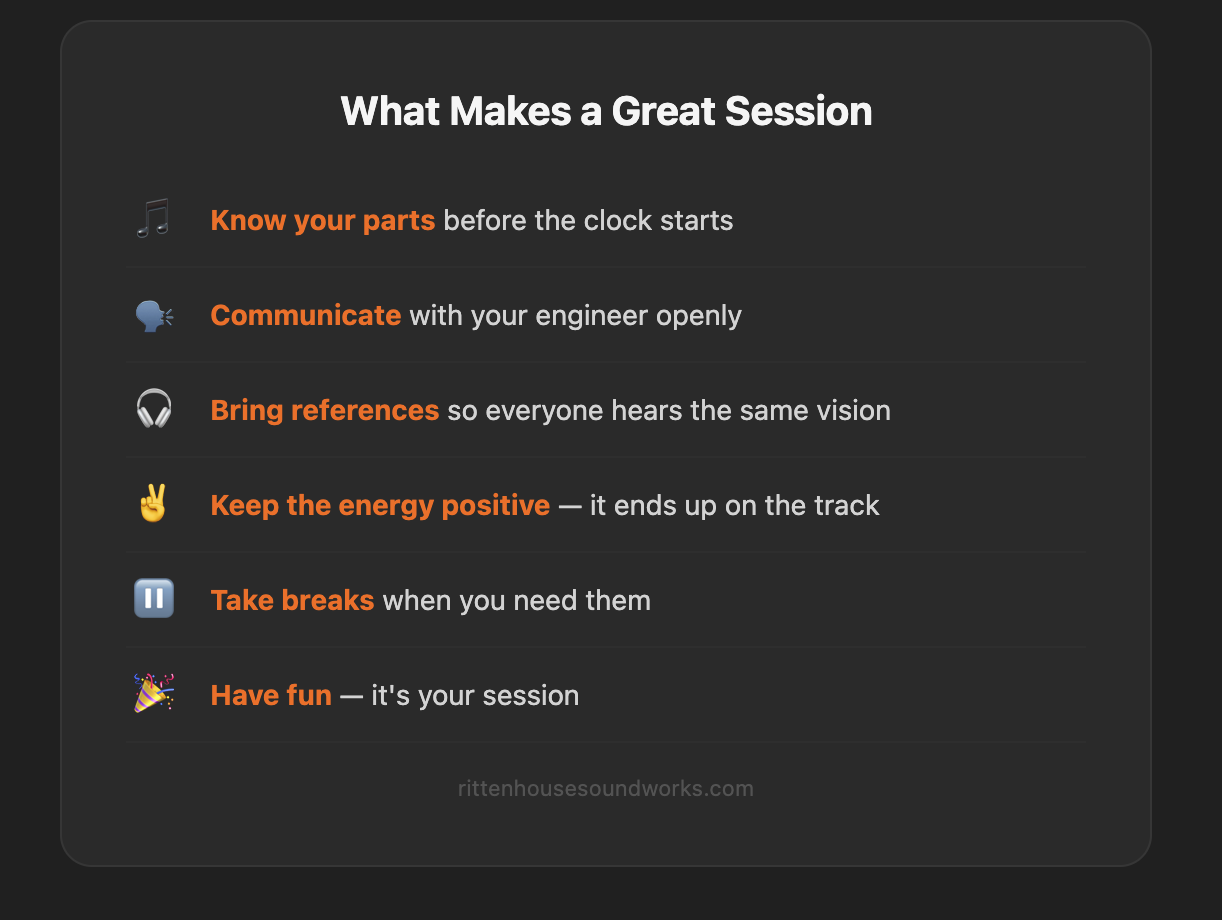
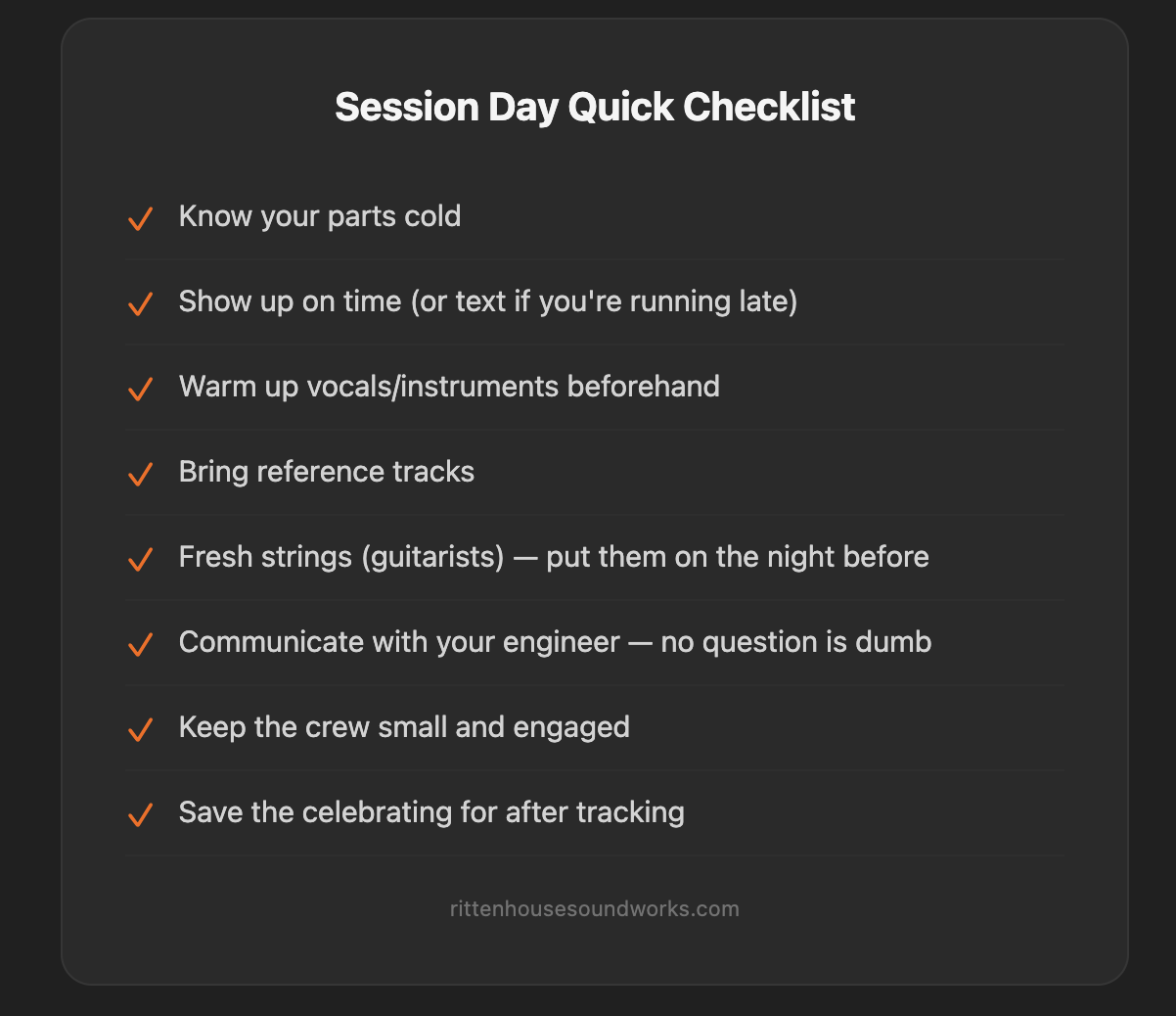
Run through your songs until you can play them without thinking. Record rough demos on your phone. Know your lyrics cold. If you’re tracking with a band, make sure everyone knows the arrangement — not just their own part, but the structure of the whole song.
The artists who come in prepared get to spend their studio time making creative decisions instead of remembering chord changes. And when you’re paying by the hour, that makes a real difference.
Be On Time (You’re Paying For It)
Studio time starts when your session starts, not when you arrive. If your block is noon to 6pm and you walk in at 12:45, you just lost 45 minutes you’re paying for.
Your engineer is likely setting up before your session — getting mics placed, dialing in headphone mixes, loading your project. When you show up on time, most things are ready to go and you can hit the ground running.
If you’re running late, a quick text goes a long way. Things happen. Nobody’s going to hold it against you. But communication makes everything smoother.
Talk To Your Engineer
Your engineer isn’t a mind reader. They want to help you get the sound in your head onto the track, but they need you to speak up.
If something doesn’t feel right in your headphones, say so. If you want to try a different approach, bring it up. If you’re hearing the vocal too dry and you want some reverb to vibe with while you’re tracking, just ask. These are easy adjustments that make a huge difference in your performance.
You don’t need to know technical terms. “Can you make the drums hit harder?” works just as well as asking for 3dB of compression on the overhead bus. A good engineer translates feel into sound — that’s the job.
The flip side: trust your engineer’s suggestions too. If they recommend one more take or want to try a different mic, they’re not wasting your time. They’re hearing things from a different perspective, and that’s exactly what you’re paying them for.
Keep The Vibe Right
A recording session is a creative environment, and the energy in the room ends up on the track. That’s not woo-woo nonsense — you can definitely hear the difference between a vocalist who’s relaxed and locked in versus one who’s tense and second-guessing every note.
Bring whoever helps you feel comfortable and creative. Leave whoever brings drama or distraction. A packed control room with eight people on their phones can kill a session’s momentum fast — not because of some policy, but because it’s hard to be vulnerable with a room full of people scrolling Instagram.
If you need to take a break, take a break. Walk around, clear your head, grab some air. Grinding through vocal takes when your voice is shot or your focus is gone produces worse results than stepping away for 15 minutes.
Warm Up Before Your Session
If you’re a vocalist, warm up before you get to the studio. Not in the live room during your booked time — before that. Your first takes of the day are often your most energized, and you don’t want to spend that energy on scales.
Same goes for instrumentalists. Show up with your fingers loose and your instrument in tune. You can always re-tune throughout the session.
Small stuff, but it adds up.
Come With References
One of the most useful things you can bring to a session is a playlist of songs that sound the way you want your project to sound. It doesn’t have to be the same genre or style. Maybe you love the drum sound on one track, the vocal space on another, the low end on something completely different.
References give you and your engineer a shared vocabulary. Instead of going back and forth trying to describe a vibe, you can point to a song and say “like that.” It saves time and gets everyone on the same page fast.
Save the Partying for After
Look, the studio is your space and we’re not here to police anyone. But tracking while you’re impaired usually means more takes, less focus, and results you may want to redo later. We’ve seen it a million times.
Your best performances come when you’re sharp and present. Celebrate after you’ve laid down something great. That being said, like we said, you can do whatever you want in the studio (within reason).
It’s Your Session
The part about studio etiquette that nobody talks about is pretty simple: the studio is there to serve your music. The room, the gear, the engineer — all of it exists to help you capture something real.
You don’t need to be nervous about doing something wrong. You don’t need to walk on eggshells. Just come prepared, communicate what you want, and stay open to the process.
At Rittenhouse Soundworks, we keep things simple. You bring the music, we bring the environment and the expertise, and we figure out the rest together. If you’re thinking about booking your first session or your fiftieth, reach out and let’s talk about what you’re working on.