Home Recording vs Studio: When Is It Worth Paying For a Studio?
Home Recording vs Studio: When Is It Worth Paying For a Studio?
Let’s skip the part where we pretend there’s only one right answer. The home recording vs studio debate depends entirely on what you’re making, what you need it to sound like, and where you are in your process.
Some of the best albums ever made started in bedrooms. And some of the worst-sounding records were tracked in expensive studios by people who didn’t know what they were doing. The room matters less than the decisions.
But there are real, practical differences between the two. And they show up in specific places.
Where Home Recording Works Well
Home recording has gotten really good. A decent interface, a solid condenser mic, and a DAW give you more recording power than professional studios had 30 years ago.
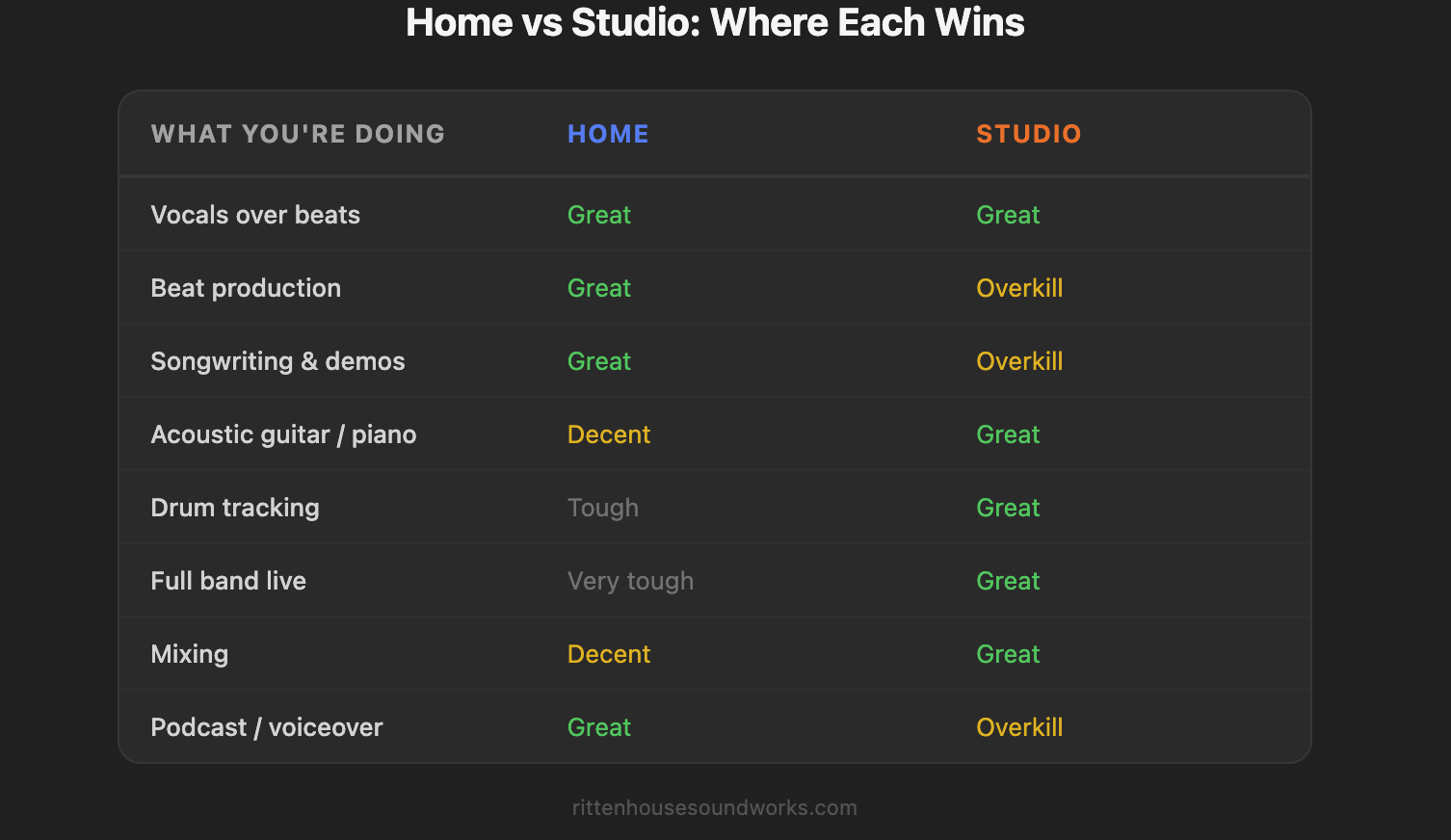
For songwriting and demos, home is ideal. You can capture ideas the moment they hit without watching a clock. Nobody’s charging you by the hour to figure out whether the bridge works better in a minor key.
Beat production and electronic music are built for home studios. If you’re working in the box — programming drums, layering synths, arranging samples — a professional studio adds almost nothing to your workflow. You need good monitors and a treated listening position, not a live room. That being said, control rooms in studios tend to be the best sounding and most accurate place to make music.
Vocal overdubs over existing instrumentals can sound great at home too. If you’re a rapper or singer tracking over produced beats, a well-treated room (even a closet with some acoustic panels) and a quality mic chain will get you 80 to 90% of the way there. Plenty of hit records were tracked exactly this way.
Practice and pre-production are also better suited to home. Working out arrangements, rehearsing parts, and refining performances before you spend money on studio time will save you money. We always recommend artists come in prepared — here’s our guide on preparing for your session.
Where Studios Pull Ahead
The gap between home and professional studio shows up in specific, predictable situations. It’s not about one being “better.” It’s about physics and experience.
Acoustics are the biggest factor. A professional studio is designed from the ground up to control sound. The live room is tuned for recording. The control room is tuned for accurate listening. Your bedroom has parallel walls, flutter echoes, bass buildup in the corners, and a window that resonates at 200 Hz. You can treat a home space, but you can’t redesign it.
Drums and live instruments are where this matters most. Recording a full drum kit well requires a room that sounds good, multiple quality microphones placed correctly, and enough preamp channels to capture it all. This is the single biggest reason bands book studio time. You can program drums at home, but if you want a real kit on your record, a studio is almost always worth it.
Live tracking (recording a full band playing together) needs isolation, headphone mixes for each player, and enough square footage that the guitar amp isn’t bleeding into the vocal mic. Most home studios can’t do this at all.
Analog gear and signal chain can make a real difference on certain sources. A vocal through a high-end preamp and compressor on the way in has a character that plugins approximate but don’t replicate. Whether that matters depends on the project and your ears, but the option exists in a studio.
An experienced engineer might be the most underrated part. Someone who’s tracked hundreds of sessions knows how to get a usable sound quickly, spot problems before they become unfixable, and make decisions that serve the mix. If you’ve never recorded vocals and you’re trying to learn mic technique, room treatment, gain staging, and performance coaching all at the same time — that’s a lot of variables. A good engineer handles the technical side so you can focus on performing.
The Hybrid Approach
What we actually recommend to most artists? Do both.
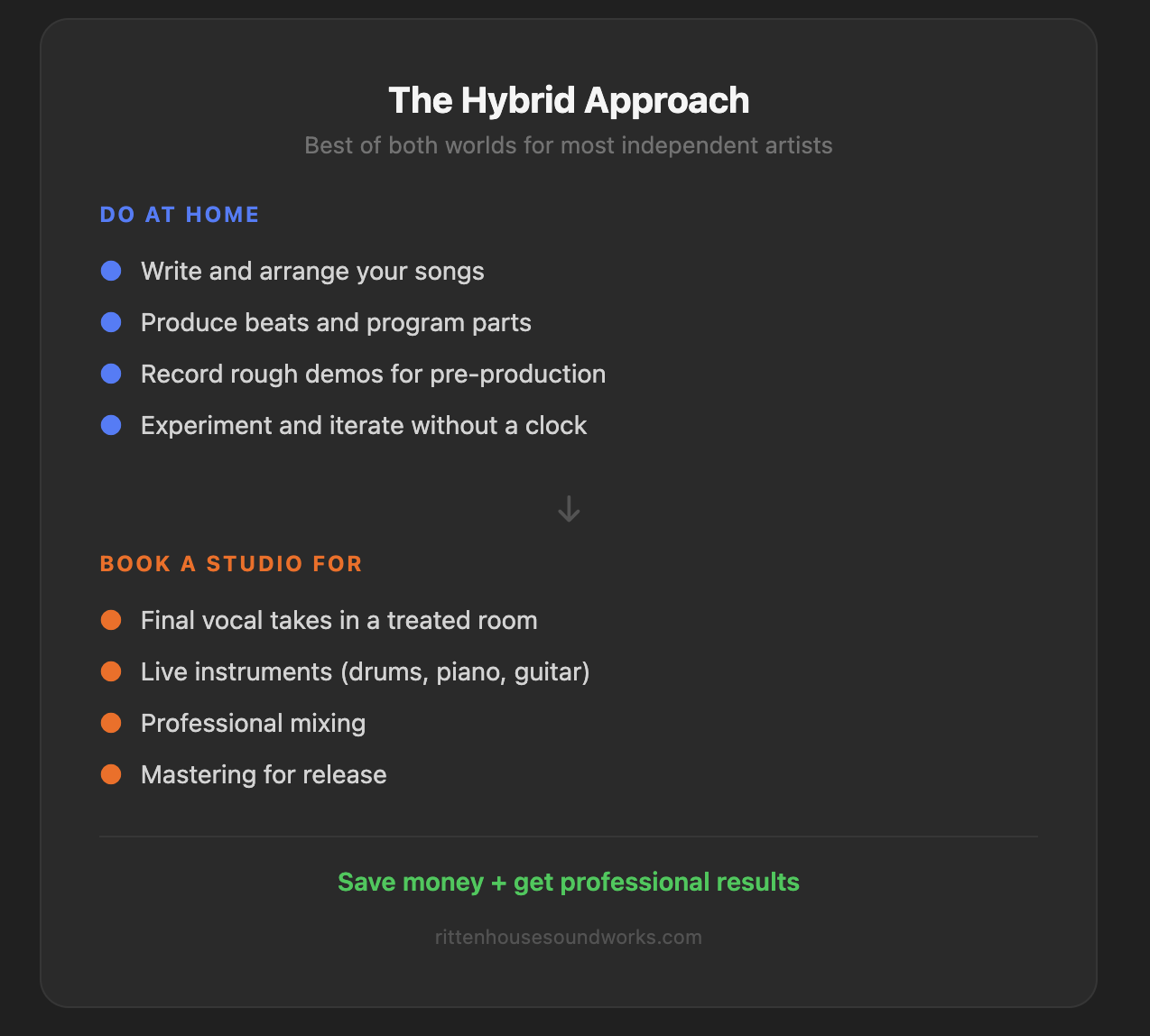
Record the stuff that doesn’t need a studio at home. Demos, scratch tracks, vocal ideas, beat production, synth parts — all of this can happen in your bedroom. Then book studio time for the things that actually benefit from it.
A typical hybrid workflow might look like this: produce and arrange at home, track drums and bass in the studio, do vocal takes either place depending on the vibe you need, then mix and master with a professional. That approach lets you spend studio money where it actually makes an audible difference.
This is especially smart if you’re working within a budget. Instead of booking three full days to do everything in a studio, book one day for the elements that need it. You’ll get better results and spend less. If you’re curious about the numbers, we broke down what studio time actually costs. Obviously if you want to just have everything taken care of and less to worry about, do it all in the studio, who are we to judge?!
When a Studio Is Worth the Money
Book a studio when:
- You’re recording drums or a live band
- You’re tracking final vocals for a release (not demos)
- You need an engineer’s ears and experience
- You want access to gear you don’t own
- The project is going to streaming platforms and needs to compete sonically
- You’ve done everything you can at home and you’re hitting a ceiling
When It’s Not Worth It
Stay home when:
- You’re still writing and arranging
- You’re producing beats or electronic music in the box
- You’re recording demos to share with bandmates or a producer
- You’re doing rough vocal takes to test ideas
- You have a well-treated space and the skills to capture clean recordings yourself
There’s no shame in either path. The goal is making the best music you can with the resources you have.
One More Thing
Whatever you record — at home or in a studio — don’t skip professional mastering. It’s the one step that makes the biggest difference per dollar spent, and it applies regardless of where you tracked.
If you’re at the point where a studio session makes sense for your project, Rittenhouse Soundworks is here when you’re ready. We’ll talk through your project and figure out together what makes sense for where you’re at.