What Does a Music Producer Actually Do?
What Does a Music Producer Actually Do?
“Producer” might be the most misunderstood job title in music. Ask five people what a music producer does and you’ll get five different answers — and honestly, they might all be right.
The confusion makes sense. The role looks completely different depending on what genre you’re working in, what era you’re talking about, and who’s in the room. Let’s break it down.
The Core of What a Producer Does
At the most basic level, a music producer is the person responsible for shaping how a song or project sounds. They’re making the big creative calls. What arrangement works. Which take to keep. When to push an artist further. When something is done.
It’s a lot like directing a film. The actors perform. The crew handles the technical side. But the director has the vision for the final product, and they’re the one steering everything toward it.
A producer might choose the tempo, suggest a key change, rearrange the chorus, decide the drums need to hit harder, or tell you that the bridge you love is actually hurting the song. Their job is to serve the music, even when that means making uncomfortable calls.
How the Role Changes by Genre
This is where it gets interesting, and where most of the confusion comes from.
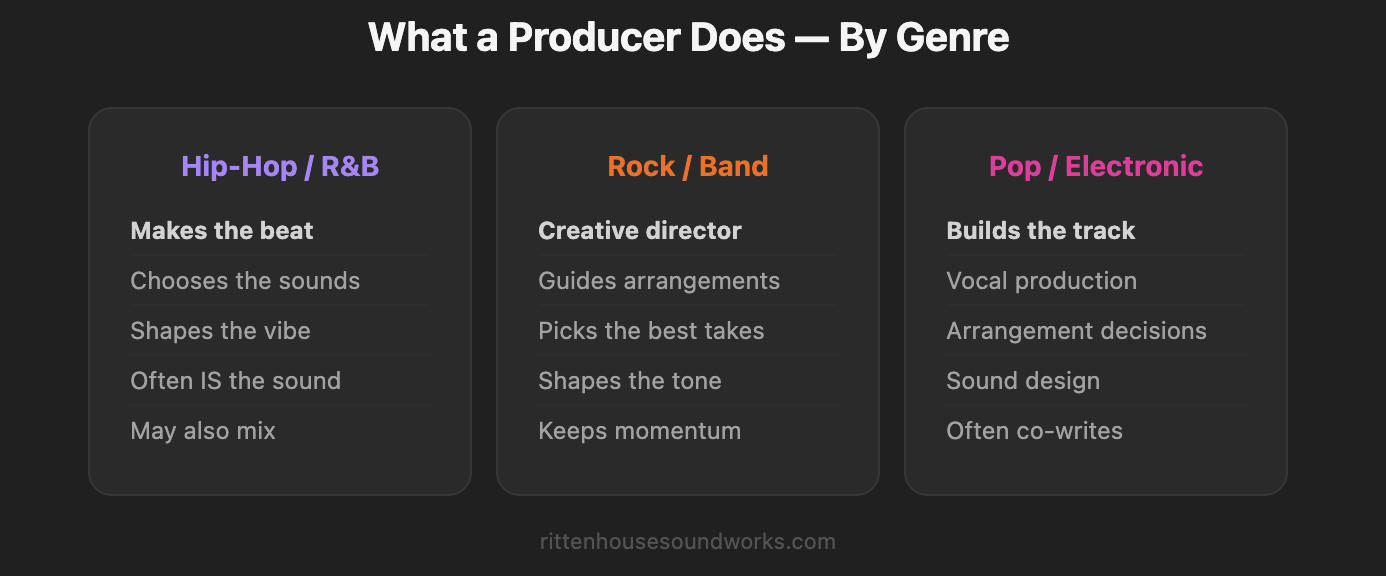
Hip-Hop and Electronic Music
In hip-hop, the producer typically builds the beat — the instrumental track that everything else sits on top of. They’re selecting or creating the sounds, programming the drums, chopping samples, building the whole sonic world from scratch. The beat IS the production.
When someone says “produced by Metro Boomin” or “produced by Pharrell,” they’re talking about the person who made the music the artist is rapping or singing over. In this context, producing and beat-making overlap almost entirely.
Rock and Band Music
In a band setting, the producer is more of a creative director. The musicians are writing and playing their own parts. The producer’s role is guiding performance, shaping arrangements, and making decisions about how everything gets captured and presented.
Rick Rubin isn’t playing guitar on those albums. He’s in the room deciding that the song needs to be stripped back, that the vocal should be more raw, that the second verse should be cut. He’s steering the ship.
Pop and R&B
Pop production often sits somewhere in between. A pop producer might build the track from the ground up — programming beats, layering synths, designing the sound palette — while also directing vocal performances, shaping melody, and arranging the song structure. It’s common for the producer to also be a co-writer.
The point is: none of these approaches is more “real” producing than the others. They’re all valid ways of doing the same core job: owning the creative outcome of the recording.
Producer vs Engineer
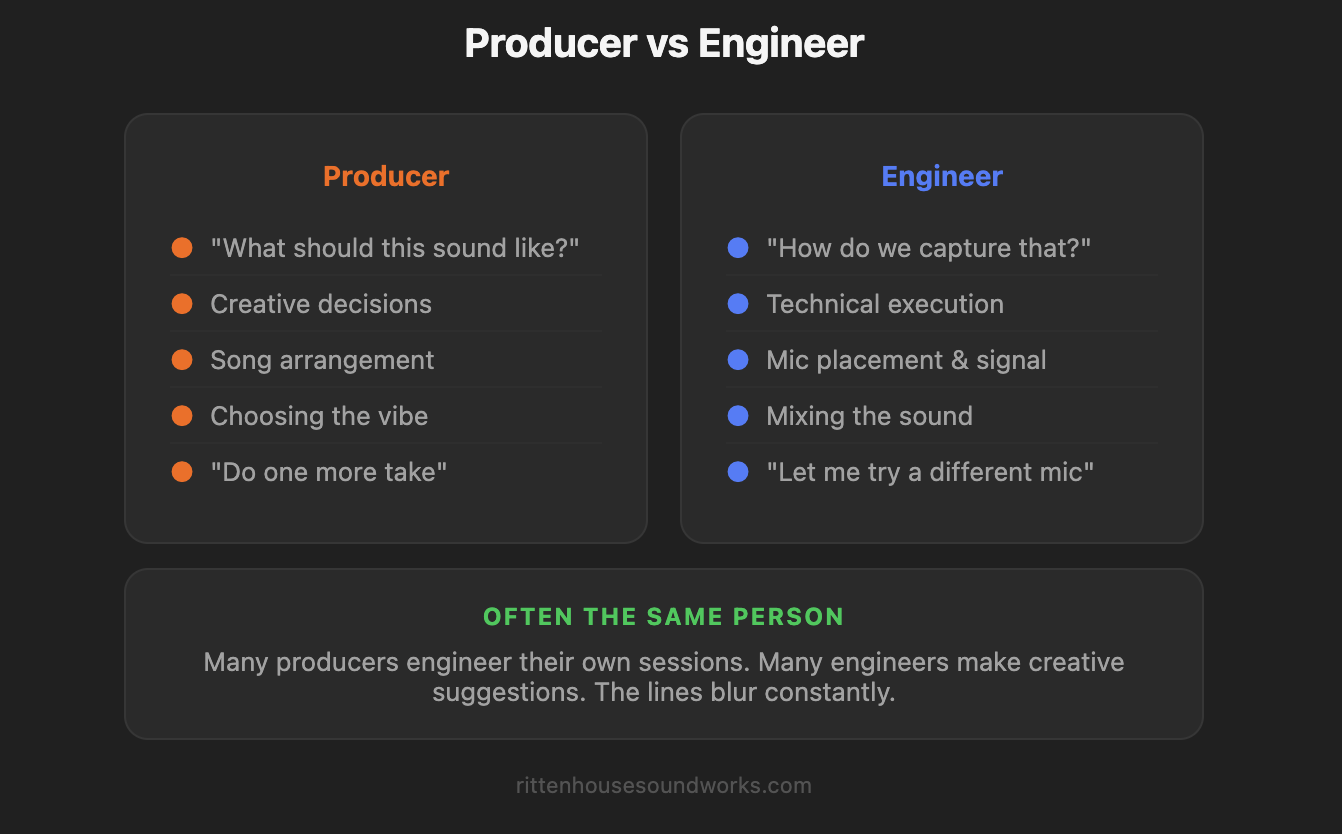
People blur these two roles all the time, but they’re not the same thing.
An engineer is the technical person. They’re setting up microphones, running the recording session, managing signal flow, mixing the tracks. Their job is capturing and shaping sound at a technical level. If you want to understand the full picture of what goes into a session, our recording costs breakdown covers how these roles factor into pricing.
A producer is the creative person. They’re deciding what gets recorded and how it should feel.
In practice, these roles overlap all the time. Plenty of producers are also skilled engineers. Plenty of engineers offer production input.
But they’re different skill sets. A great engineer can make anything sound polished and professional. A great producer can tell you that the song itself needs to change before it’s worth polishing.
Producer vs Beat Maker
Every beat maker who also shapes the artist’s performance, guides vocal delivery, makes arrangement decisions, and stays involved through the mix? That’s a producer.
But making a beat and sending it off as a WAV file is beat-making, not producing. There’s nothing wrong with that — it’s a legitimate and valuable craft. The distinction is about scope. A beat maker creates the instrumental. A producer owns the creative vision for the finished song. Obviously officially, or what is credited for a song could be completely different and often is.
A lot of people who call themselves producers are really beat makers, and a lot of beat makers are doing more production work than they give themselves credit for. The title matters less than what you’re actually contributing to the project.
Do You Actually Need a Producer?
Sometimes yes, sometimes no. It depends on where you are and what you’re trying to make.
You probably need a producer if:
- You have songs but can’t figure out why they don’t sound “finished”
- You keep second-guessing your own creative decisions
- You’re making your first serious project and want experienced ears in the room
- You need someone to build the track around your vocals or lyrics
You might not need one if:
- You have a clear creative vision and the skills to execute it
- You’re already producing your own work and getting results you’re happy with
- You work well with just an engineer and can direct your own sessions (our studio session tips can help you make the most of that setup)
If you’re recording at home vs in a studio, the production question becomes even more relevant. Working alone means you’re producing yourself by default — which is fine if you have the experience, and a real limitation if you don’t.
A good producer can transform a decent project into something special. But a bad producer — or one who isn’t right for your genre and vision — can steer things in a direction you never wanted. The fit matters more than the title.
Finding the Right Fit
If you’re looking for production help, the most important thing is alignment. Listen to their previous work. Talk about your references. Make sure they understand what you’re going for before anyone hits record.
And understand that production doesn’t have to mean handing over creative control. The best producers amplify what the artist is already doing. They don’t replace it.
If you’re not sure what level of support you need — full production, co-production, or just a great engineer who can capture your vision — let’s talk about it. We can help you figure out the right setup before you spend anything on studio time. We don’t have in house producers but can certainly send you some recommendations.