How to Get the Best Vocal Recording
How to Get the Best Vocal Recording
A great vocal recording doesn’t start with an expensive microphone. It starts with understanding what the song actually needs.
That might sound obvious, but it’s the thing most people skip. They Google “best vocal chain” and apply the same settings to everything. A hip-hop vocal and a jazz vocal have almost nothing in common. The mic, the distance, the room, the processing — all of it changes depending on genre and song.
The Basics That Always Matter
A few things will improve any vocal session regardless of genre.
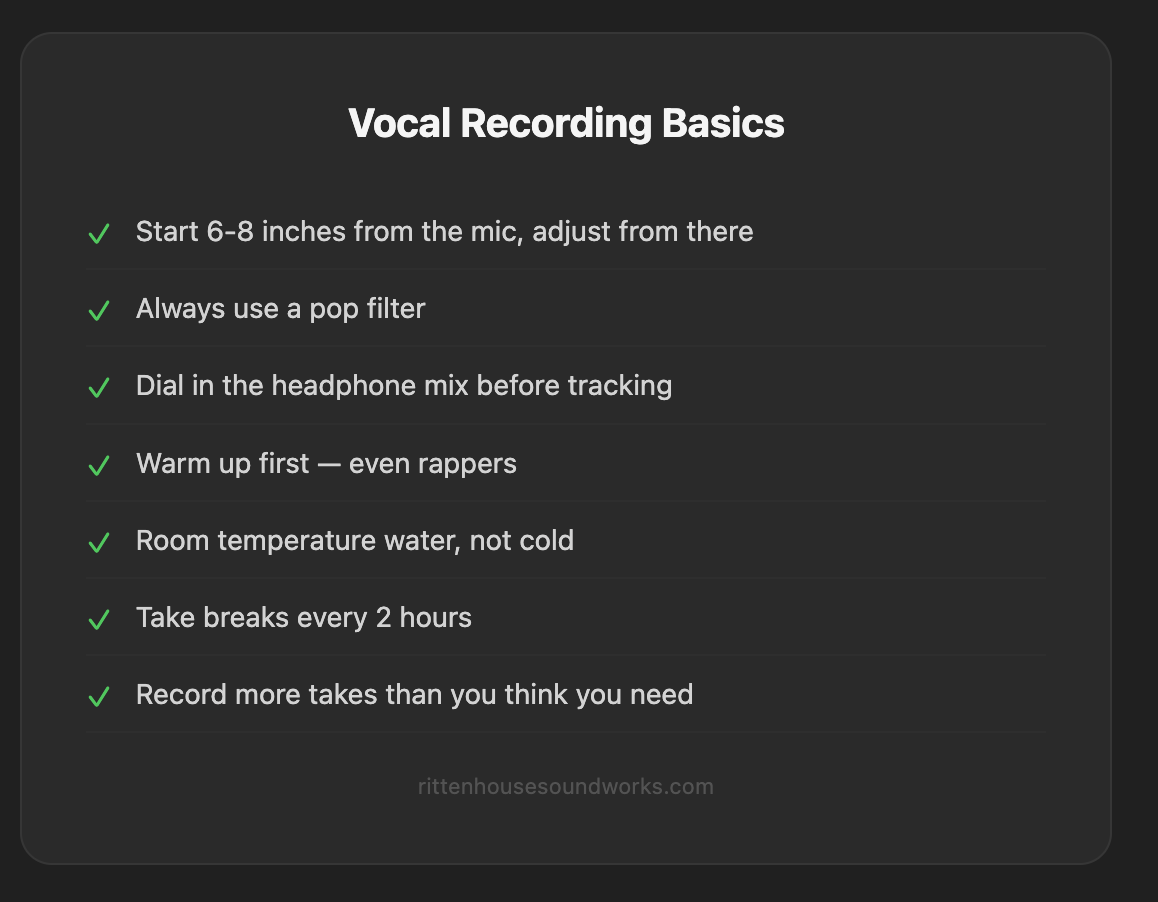
Mic technique is everything. The distance between singer and microphone changes the entire sound. Closer means more bass buildup (proximity effect) and more intimacy. Farther means more room sound and a thinner tone. Start about 6 to 8 inches away and adjust from there. A pop filter isn’t optional.
The headphone mix matters more than you’d expect. If the singer can’t hear themselves well, they’ll push too hard or hold back. Spend a few minutes dialing in the monitor mix before tracking. Some singers want reverb in the headphones. Some want it bone dry. Ask. Some want autotune, some don’t.
Warm up. This applies to rappers too, not just singers. Five to ten minutes of warm-ups or running through the song at low intensity makes a real difference. Cold vocals sound thin and tight.
Stay hydrated and take breaks. Room temperature water keeps the vocal cords from drying out. Tea can be very helpful for singers. Sessions that push past two hours without a break almost always produce worse takes toward the end. The voice is a muscle. It fatigues.
Record more takes than you think you need. You can always comp the best moments later. You can’t fix a performance that was never captured.
How Genre Changes the Approach
This is where vocal recording tips stop being universal. What sounds right for one genre will sound completely wrong in another.
Hip-Hop and Rap
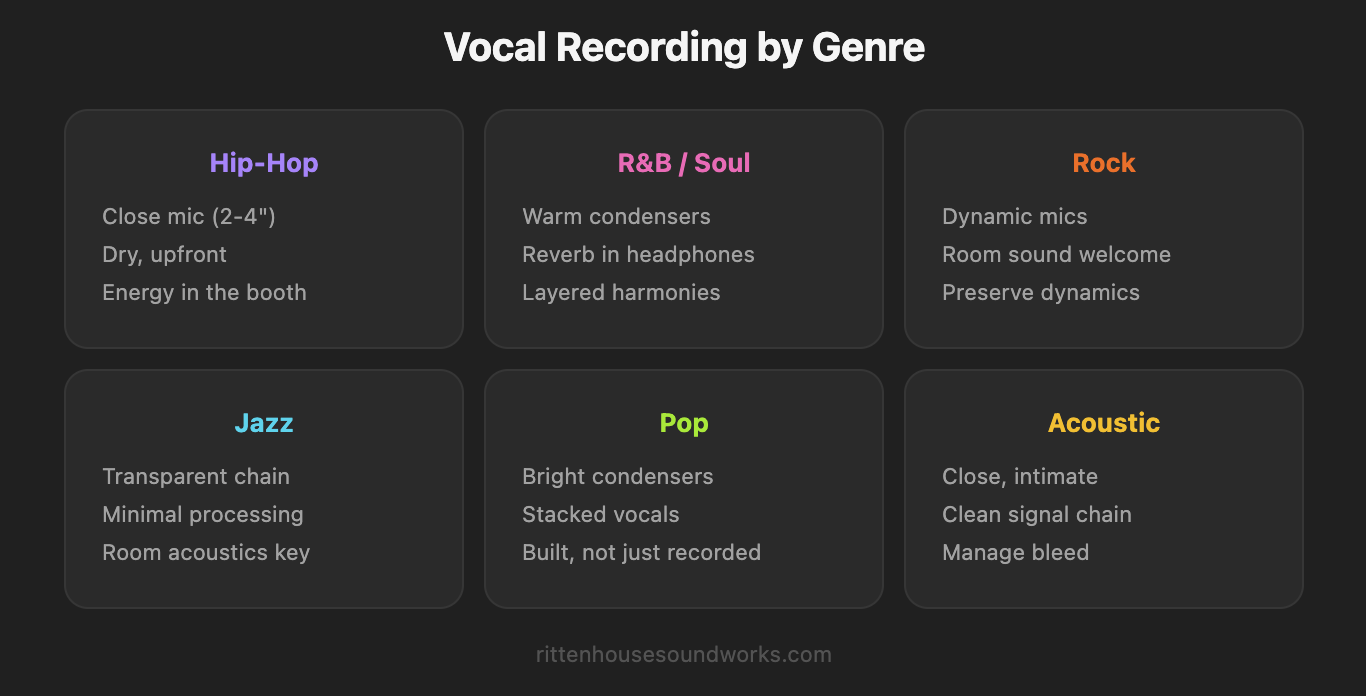
Hip-hop vocals usually sit right up front in the mix, dry and present. Get the artist close to the mic, sometimes as close as 2 to 4 inches with a pop filter. You want that proximity effect adding weight and chest to the voice.
Large-diaphragm condensers are standard for a reason. They have the most amount of clarity for these types of vocals. Compression during tracking is common here, keeping levels consistent when an artist jumps from a quiet bar to a full-volume ad-lib.
Energy in the booth is part of the recording. Some of the best hip-hop vocals happen when the artist is moving and feeling it, not standing stiff behind a mic stand.
R&B and Soul
R&B vocals tend to be smooth and warm with plenty of layers. The mic choice often leans toward large-diaphragm condensers with a warmer character. A little more distance (8 to 12 inches) helps keep the low end controlled while still capturing detail.
Reverb and delay in the headphone mix are almost always a good idea for R&B sessions. Singers in this genre rely on hearing that space to deliver the right feel.
Plan for harmonies and stacks. R&B production often involves multiple vocal layers, and each one needs its own space. Keeping the recording clean and consistent across layers makes mixing and mastering much easier down the line.
Rock
Rock vocals can range from a controlled croon to a full scream, sometimes in the same song. Dynamic mics shine here because they handle volume swings well and add a midrange character that cuts through loud guitars. Condensor Microphones can work for rock as well (the gold standard).
Room sound can be your friend in rock. Where most genres want isolation, rock vocals sometimes benefit from ambience. Some engineers will blend a room mic with the close mic for that extra dimension. This is especially helpful in a large live room.
Don’t over-compress rock vocals during tracking. A singer going from a whisper to a shout is supposed to feel that way. Preserve the dynamics.
Jazz
Jazz vocal recording is about capturing the performance with minimal interference. The microphone should be transparent and the signal chain clean. You’re not building a sound — you’re documenting one.
A quality large-diaphragm condenser at a moderate distance (10 to 14 inches) works well. Many jazz vocalists are trained performers with excellent mic technique already.
Minimal compression, minimal EQ, no autotune. Jazz listeners expect to hear the human voice, imperfections and all. Room acoustics matter more here than in almost any other genre because there’s less production to hide behind.
Pop
Pop vocals are built, not just recorded. The tracking is only the beginning. You’re capturing raw material that will be tuned, compressed, and stacked into a polished final product.
Bright, detailed condenser mics are the standard because the mix will emphasize high-frequency detail. Get the artist close with a pop filter and aim for a controlled performance. Pop sessions often involve recording the same phrase dozens of times to build layered choruses.
The headphone mix should usually include a rough version of the production so the vocalist can match the track’s energy. Pop vocals recorded in isolation, without hearing the beat, almost always sound disconnected.
Singer-Songwriter and Acoustic
Intimate genres demand intimate recording. The vocal should feel like the artist is right in front of you. Close mic placement in a quiet room with a clean signal chain is the goal.
If the artist is singing and playing guitar simultaneously, you’ll need to manage bleed. Cardioid patterns help, and pointing the vocal mic away from the guitar sound hole reduces the problem. Sometimes a little bleed is fine. It can add to the live feel. A common mic for this is a AKG C414 as it can be very direct and isolated.
This is the genre where room choice matters most relative to budget. A noisy apartment with a fridge humming in the background will show up in every quiet moment.
Home Recording vs. Studio for Vocals
Can you get a good vocal recording at home? Yes, with limitations. A treated room and a decent condenser mic with a clean preamp will get you surprisingly far for singer-songwriter, pop demos, or mellow R&B.
Where home recording struggles is isolation and consistency. Street noise, room reflections, HVAC rumble. For genres where the vocal sits exposed and dry, room problems are harder to hide.
A professional studio gives you a controlled acoustic environment and an engineer who can coach your performance in real time. If vocals are the centerpiece of your music, that investment pays for itself. We’ve written more about when a studio makes sense.
Knowing your genre’s vocal requirements before your first session will save you time and money.
Getting It Right
The difference between an okay vocal and a great one is rarely the gear. It’s understanding what the song needs and recording with that intention from the start. A rapper performing with energy, a jazz singer captured in a beautiful room, a pop vocalist stacked into a wall of harmonies. Different approaches, all equally valid.
At Rittenhouse Soundworks, we record vocals across every genre. Whether you’re cutting a demo or tracking an album, we’ll set up the session around what your music actually calls for. Reach out and let’s talk about your project — we’d rather spend time getting the sound right than fixing it later. We have engineers available who specialize in every genre.